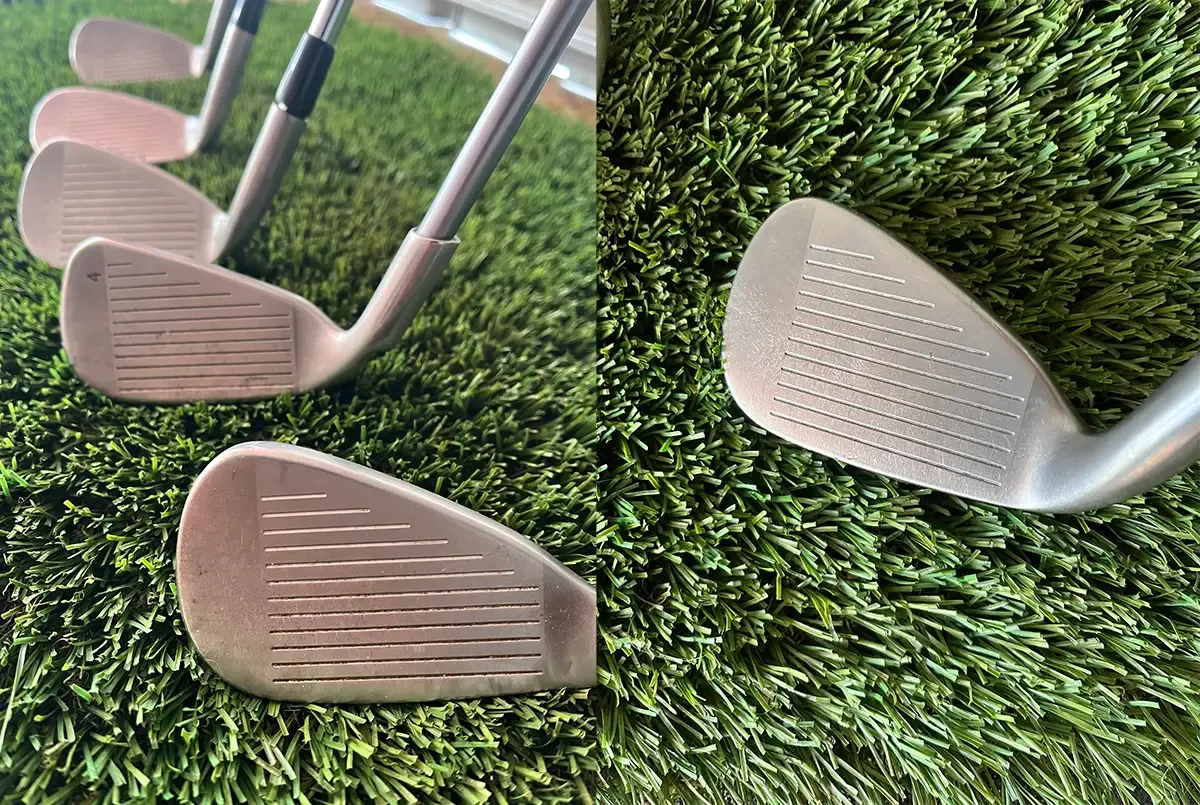
You do not need to leave your clubs sitting in a bucket to get them clean.
I used to. Then a club fitter told me not to make soaking part of the routine, so I changed how I do it. Now I use warm tap water, a little dish soap, a brief dip, a soft brush, and a towel.
Not only is this a better method, but it’s quicker too. It gives me a clean face and clear grooves without turning a post-round clean into something I keep putting off.
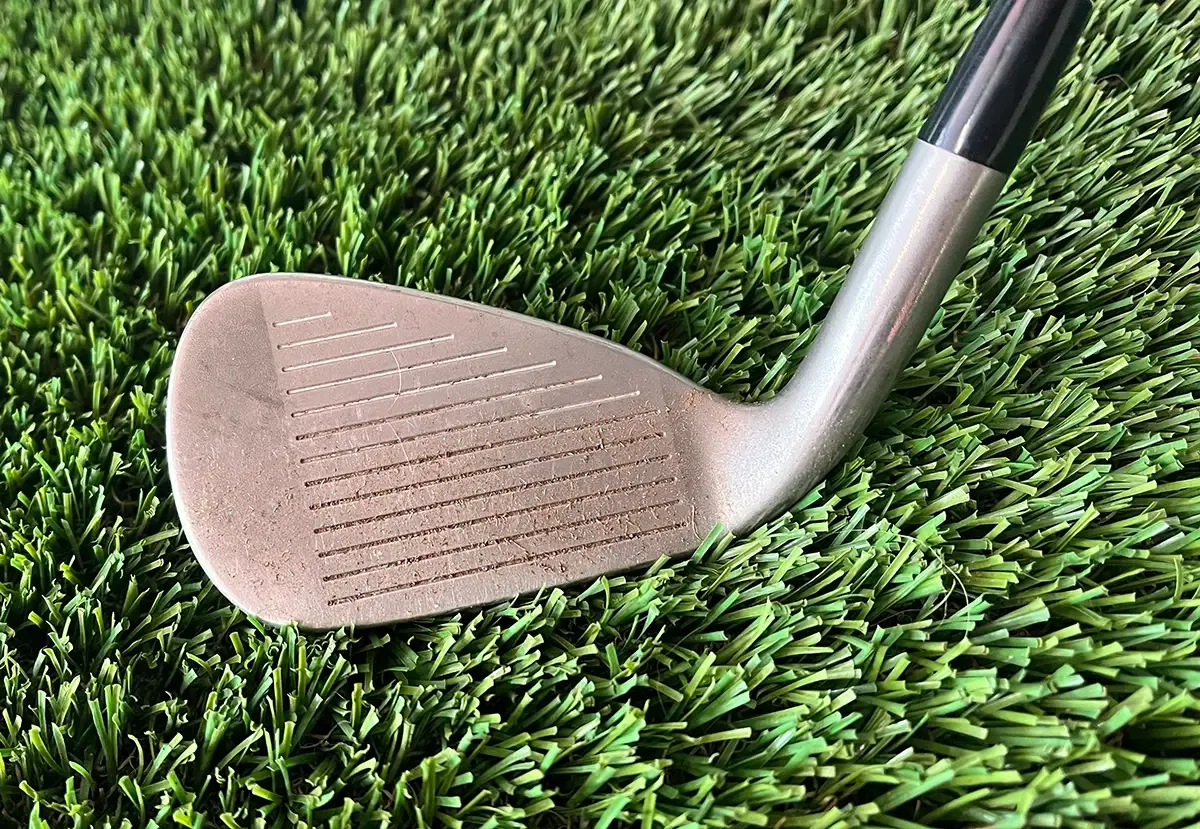
Clean grooves matter because dirt and grass can affect spin and control, especially on irons and wedges. DICK’S public club-care guidance makes the same limited point. Spin matters most around the green, which is where wedge loft and bounce do their work.
Clean clubs give you the best chance for clean shots. It means you have removed one simple thing that can get in the way of the shot you were trying to hit.
What you need
Keep it boring:
- Warm tap water
- A small amount of mild dish soap
- A soft brush
- A towel
That is enough for most jobs. You do not need a shelf full of cleaners.
My no-soak routine
1. Use warm tap water
Fill a bucket or sink with warm tap water and add a little dish soap. You want enough water to dip the clubhead. You don’t need to make a bath for the whole club.
2. Dip, then scrub
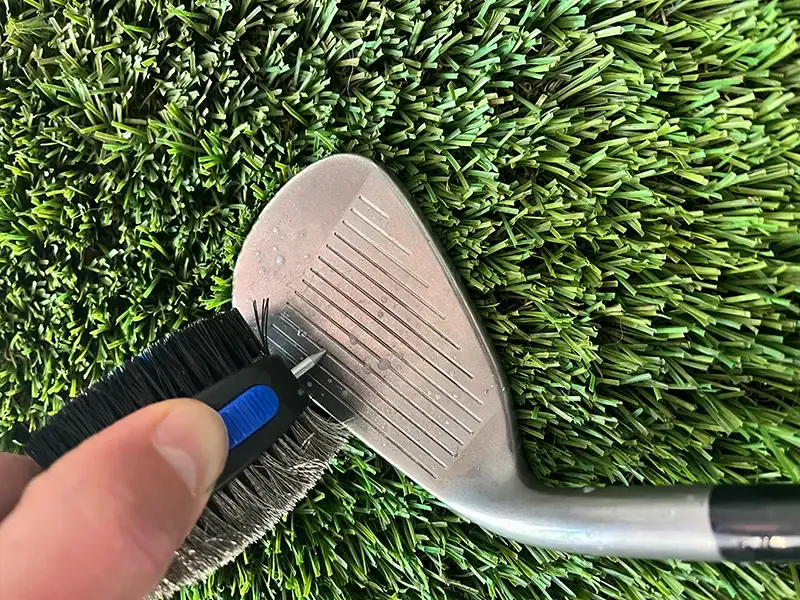
Dip the clubhead briefly, take it out, then scrub the face and grooves with a soft brush. If there is packed dirt in a groove, take your time with that one rather than leaving the club in the water longer.
This is the part I changed. I don’t soak my clubs anymore. A fitter told me not to make it part of the routine because it could potentially lead to water getting into the ferrule and rusting or weakening it over time. Dallas Golf’s club-care guidance makes the same point about keeping the ferrule and hosel out of the water. Now, a brief dip and a scrub with a brush has been enough for me.
3. Wipe and dry it right away
After a scrub, wipe the face, sole, and back of the head. Then run the towel over the shaft and grip before the club goes back in the bag.
Dry the club before you move on.
4. Do not save every bit of dirt for later
Wiping the face during the round makes the home clean far easier. Keep a damp section of towel available, clean the face when there is mud or grass on it, then use the dry section before the club goes back in the bag.
It is not about getting the whole bag showroom clean. Get the face and grooves clear, dry the club, then move on.
Pick the club you are cleaning
The face of an iron can take a different clean from the crown of a driver. Use the route that matches what is in your hand.
Iron or wedge
Use the warm-water dip, soft brush, and towel routine above. Spend your attention on the grooves. Do not leave the club sitting in the water while you move on to the next one.
Wood or hybrid
Use a damp cloth first. If the face needs help, use a soft brush gently on the face, then dry it. Do not submerge the head.
Putter
A damp cloth usually does the job. Wipe the face and head, then dry it. There is no prize for making the putter the most complicated club to clean.
Grip
Use a damp cloth and dry it with the towel. Do not leave grips wet, and check the care guidance for your particular grip if you are tempted to use anything stronger.
The no-soak club cleaning card
Use this before a round, after a muddy round, or whenever the grooves have started looking rough.
No-soak club cleaning
- Put warm tap water and a little mild dish soap in a bucket or sink.
- Dip one clubhead briefly. Do not leave the club soaking.
- Use a soft brush on the face and grooves, then wipe the head, shaft, and grip.
- Keep a damp towel in the bag so you are not starting from scratch after every round.
weekendgolfing.com
A clean club is still not a diagnosis
Keep your clubs clean. It is an easy bit of prep that removes an avoidable variable.
But if your clubs are clean and you still do not know why the same shots keep costing you, you need more than a better brush. That is the point of the DIAL Method. It helps you find the part of your game that needs attention instead of guessing.